
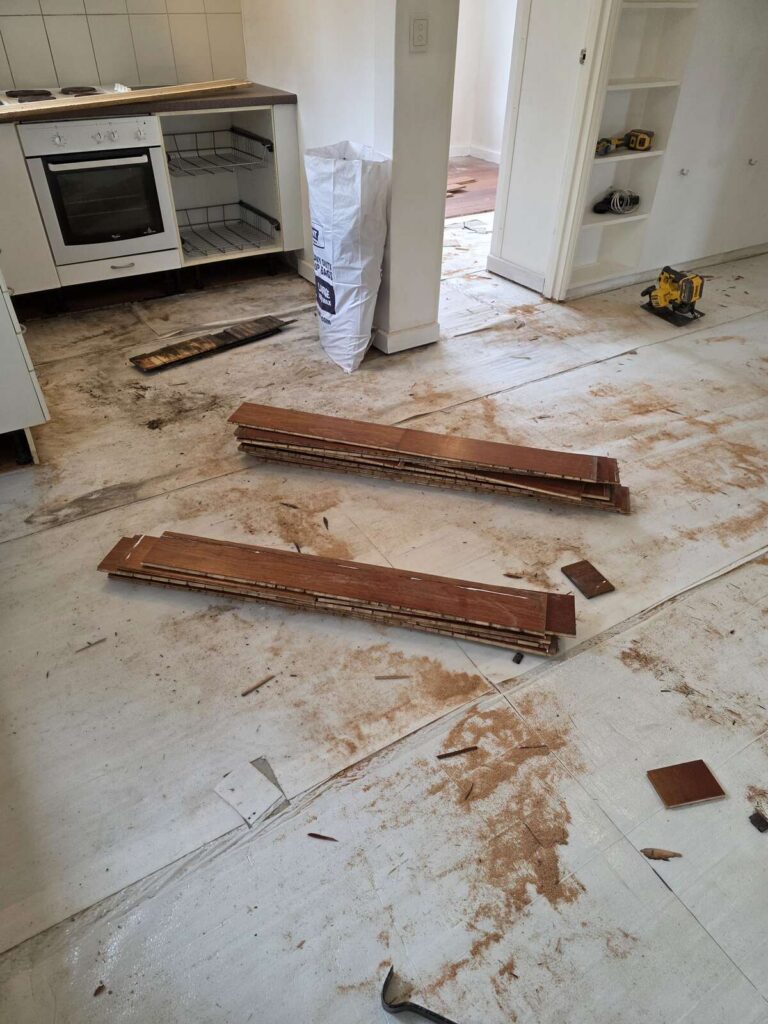

The photographs above show an actual engineered timber flooring project completed by Walewski Flooring in Melbourne following a major water leak.
The source of the problem was a failed plumbing pipe that allowed water to travel underneath the flooring system. Because the leak remained undetected for an extended period, moisture became trapped beneath the engineered timber floorboards, creating ideal conditions for mould growth, fungal contamination, and timber deterioration.
What We Found During Demolition
Once the flooring was removed, extensive damage became immediately visible:
- Severe mould growth on the underside of the engineered timber planks.
- Timber delamination caused by prolonged moisture exposure.
- Structural failure of the plywood core.
- Wood rot affecting multiple floorboards.
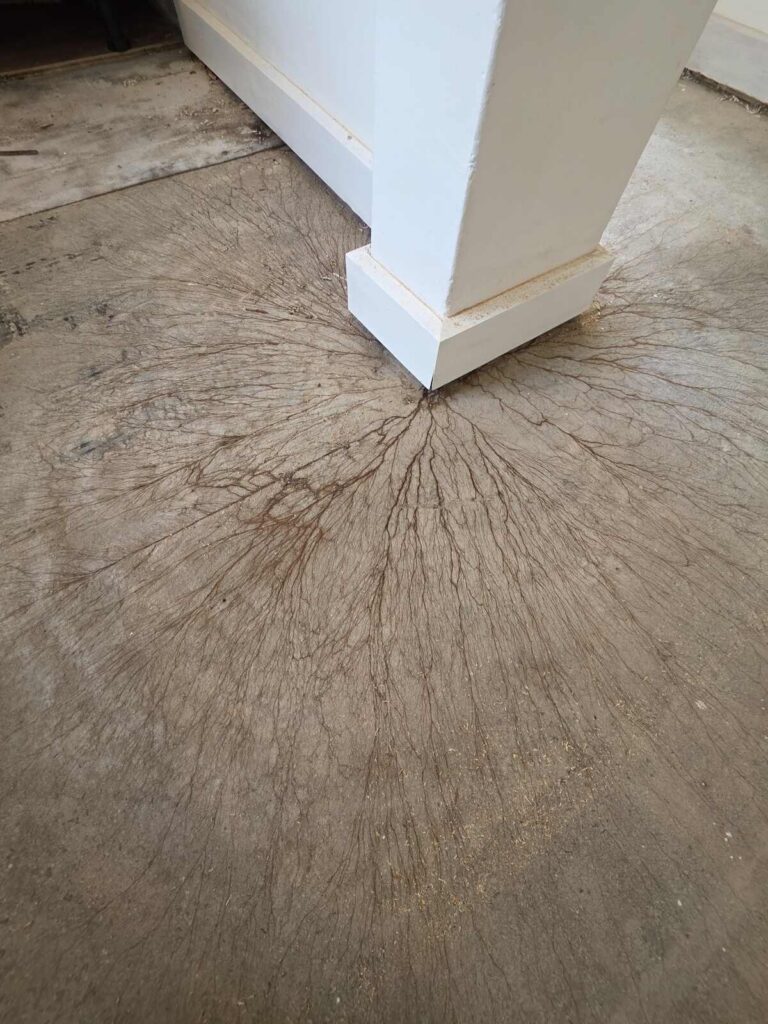
- Fungal mycelium spreading across the concrete slab.
- Moisture contamination extending well beyond the original leak location.
One of the most striking discoveries was the extensive fungal mycelium network visible on the concrete subfloor. Fungal mycelium is the root-like structure of fungi that develops when moisture remains present for long periods of time. In this case, the fungal growth spread beneath the flooring system and across the slab surface, indicating that moisture had been trapped underneath the floor for a significant period.
Why Drying the Floor Was Not an Option

Many homeowners ask whether water-damaged engineered timber flooring can simply be dried and reused.
The answer is no when the flooring has reached this stage of deterioration.
As shown in these images, the engineered timber boards had already suffered irreversible damage. The flooring layers were separating, the timber substrate was breaking down, and mould contamination was present throughout the affected area.
Even if the floor were allowed to dry, the following issues would remain:
- Permanent structural damage to the floorboards.
- Continued risk of hidden mould contamination.
- Potential indoor air quality concerns.
- Reduced flooring lifespan.
- Ongoing odours and moisture-related problems.
The Correct Remediation Process
For this project, the only safe and professional solution was:
- Remove all affected engineered timber flooring.
- Dispose of contaminated materials.
- Thoroughly inspect the concrete slab.
- Eliminate the source of the water ingress.
- Allow the subfloor to dry completely.
- Prepare the slab for new flooring installation.
- Install a new flooring system once moisture levels were confirmed safe.
Need Help With Water-Damaged Flooring in Melbourne?
If you have experienced a bathroom leak, burst pipe, flooding event, dishwasher leak, washing machine overflow, or any other water-related flooring issue, contact Walewski Flooring for professional advice.
We specialise in:
✔ Water damaged engineered timber flooring replacement
✔ Timber floor moisture inspections
✔ Hybrid flooring installation Melbourne
✔ Laminate flooring installation Melbourne
✔ Engineered timber flooring Melbourne
✔ Floor preparation and subfloor remediation
✔ Residential and apartment flooring renovations
Early detection can save thousands of dollars in repairs and prevent serious mould contamination from spreading throughout the property.